




Free shipping within Austria from € 99
Free shipping to Germany from € 120
What is Natural Wine?
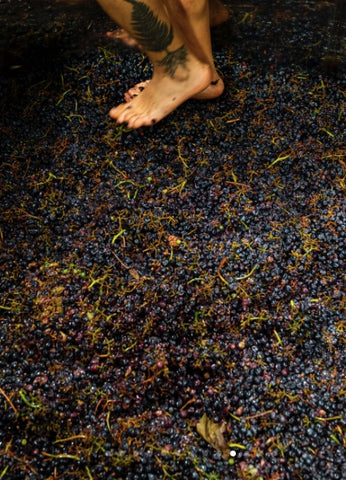
Natural winegrowers have sustainably transformed the world of wine since the turn of the millennium. Initially ridiculed and not infrequently attacked, they have since opened up not only new flavor profiles in their wines. Through their innovative and sustainable approaches and styles, they have also prompted a rethink among many journalists, fellow winemakers, and—above all—consumers. In this article, we attempt to distill the term natural wine and some of its essential aspects.
“Natural wine is the radical counterpoint to conventionally produced wines—more specifically, it is a response to the industrial, branded, and globalized wine world.”
“Natural wine focuses on local traditions and grape varieties.”
“Winemakers who put natural wine into the bottle strive to wrest authenticity from their wines. They look deep into the past in order to transform it and, with their wines, point out alternative paths into the future.”
“Natural wine movements sharply distance themselves from conventional currents and occupy the niches of the wine world.”
These are just a few of the thoughts one hears from natural winegrowers when asked about their professional self-conception.
But natural wine is much more than that. One essential aspect that is still often left out of discussions around the term is the ethical background shared by most natural winegrowers—something that can quite rightly be seen as a unifying denominator.
In multiple senses, this revolves around the word renunciation, a term that is currently—and quite unjustly—frequently stigmatized.
For example, in the vineyard one refrains as much as possible from all those options offered by the agricultural industry, whether artificial fertilizers, pesticides, fungicides, or a host of other chemical agents. Many natural winegrowers do not stop at avoiding chemicals; they also try to minimize the use of mechanical aids—little or no tractor use, no harvesting machines, etc.
Perhaps the best example is Thomas Niedermayr from Eppan. Thomas cultivates almost exclusively PIWIs (fungus-resistant grape varieties), which allows him to dispense with spraying agents altogether. As a result, he can leave the tractor in the barn and plant vegetables in the tracks he would otherwise need in the vineyard. This not only promotes root penetration and soil health, but—across a total of five hectares of vineyards—also has a positive economic impact.
Renunciation, however, can only be practiced if one develops a deep understanding of what happens in the vineyard and is willing to accept the patience and additional effort that explicitly organic or biodynamic work entails. Beyond healthy and vital soils, this is above all about breaking up the monoculture that vineyards generally represent.
Natural Wine: In the Vineyard
As mentioned at the outset, much of this is based on an ethical foundation, yet it is obvious that well-tended vines in the vineyard usually also result in better wines. At the very least, it is a fact that vines not tormented by synthetic plant protection products are longer-lived, and that old vines generally regulate themselves better. Incidentally, even staunch opponents of natural wines like to cite old vines as a quality criterion for great wines (and in the natural wine world, “old vines” generally means at least 50 years old, sometimes even 70 or 100 years).

Another apparent advantage is a relatively quickly established balance and a continuous development of the grapes, often leading to earlier physiological ripeness at lower sugar levels and alcohol degrees. The conclusion that vineyards worked in a strictly organic manner express their terroir better is hypothetical and scientifically unproven, yet it seems plausible that vineyards which have never seen synthetic plant protection products or systemic herbicides throughout their lives can also yield more authentic wines.
An intensive pursuit of maximum biodiversity is therefore a buzzword that can be applied fairly safely to the entire collective of natural winegrowers, without undermining the personal dimension that each grower (and each terroir) brings with it.
There are as many individual approaches as there are natural winegrowers.
Instead of the regularly arriving spraying instructions that many conventional growers receive—preemptively and preventively—from industry straight to their computers, natural winegrowers go their own ways. At the same time, there is often lively exchange among themselves as well as with various research institutions and universities (Elisabetta Foradori, to name just one among many, worked intensively with the University of Milan on her project to expand the gene pool of Teroldego).
The Cultural Dimension of Natural Wine
Natural diversification goes hand in hand with cultural diversity. The latter often focuses on preserving local traditions and, above all, grape varieties that risk being lost in the course of the increasing commercialization and internationalization of the wine world.
Here, too, a small example is worthwhile. Lambrusco, once sold only regionally, experienced an enormous boom after World War II thanks to altered production methods, the use of just a few but extremely productive clones, and unbelievably low prices. This worked for a while, until even the low prices could no longer mask the bleak quality. The decline was merciless. At the beginning of the new millennium, a small group of artisanal, organically working winemakers formed and began once again to ferment their Lambruscos in bottle as in the past. They also ventured into the vineyards of old farmers to track down grape varieties long thought lost and replant them.

Thus, Max Brondolo of Podere Sottoilnoce processes, alongside the three classic Lambrusco varieties Grasparossa, Sorbara, and Salamino, a good half-dozen others, while the winery Ca’ de Noci devotes its own bottlings to the extremely rare grape variety Sgavetta.
Hands-Off Philosophy: Natural Wine in the Cellar
For many winemakers and critics, it is above all the hands-off philosophy in the cellar that distinguishes natural wine from other categories. A crucial factor here is the use of SO₂. Sulfur dioxide is the chemical additive that is hardest to do without in the cellar. Its function has been discussed elsewhere; its symbolic significance, however, also deserves a few words, as it stands quasi-representatively for a multitude of other additives that are often shrouded in silence.
Sulfites and Other Additives in Wine
Their use has been heavily strained—and simultaneously promoted—in conventional vinification over recent decades. The list of potential additives is so long that simply reading through it and the suppliers’ catalogs can easily take several hours. If one then also tries to correctly pronounce words like pectin methylesterase and polyvinylpolypyrrolidone and understand their functions, even more time should be budgeted.
Given the multitude of manipulation options, the looming degeneration of wine into an interchangeable high-tech beverage, and the desire to clearly distinguish themselves from industrial wines, it is hardly surprising that many natural winegrowers try to use no additives at all—and consequently no sulfur dioxide. This does not mean, however, that the winemakers have nothing to do.
On the contrary: working without additives means remaining extremely attentive before and during fermentation, avoiding unnecessary oxidation of the grapes, perhaps briefly macerating them, and taking many small but important steps. Working completely without sulfur dioxide requires enormous experience, a great deal of craftsmanship, and above all absolutely healthy grape material (work in the cellar and in the vineyard can never be separated). This is why only very few winemakers dare to forgo SO₂ entirely (in our range these include Aldo Viola, Roland Tauss, SRC, Ca’ de Noci, Davide Spillare, Barranco Oscuro, Čotar, Schmelzer, La Possa, HP Harrer). Most use tiny amounts they consider essential for the stability of their wines. We regard 50 mg/liter as a maximum—well below the legally permitted limit.
Another decisive point for us during vinification is the avoidance of cultured yeasts—or, put positively, the use of wild yeasts. Yeasts are microscopically small but highly individual. They exert an eminent influence on a wine’s taste, are elemental representatives of their terroir, and are essential for expressing the characteristics of a vineyard. All of our winemakers exclusively use wild yeasts or pied de cuve—their own “yeast cultures” from selected, spontaneously fermented grapes—as starter cultures.
Orange Wine
Often associated with natural wine are skin-fermented wines, better known as “orange wines.” And indeed, it was winemakers from the natural wine movement who revived this stylistic approach, which actually dates back centuries. That conventional winemakers now also produce orange wines is their right and shows the influence natural winegrowers have had on the wine world over the past 25 years. It also means, however, that orange wines are not necessarily natural wines.

Orange wines are, in principle, wines in which the color and tannins are extracted from the skins of white grapes. The basic principle corresponds exactly to red wine production: the skins remain in contact with the must (and sometimes even with the finished wine) for a certain period, extracting phenols, pigments, aromas, and more into the wine. How intense this contact should be is at the winemaker’s discretion. Maceration times range from 3–4 days to 80 or 100 days, though some producers experiment with even longer periods.
Three decisive things happen in this process. First, as mentioned, pigments are dissolved from the grapes; second, as with red wine, tannins are extracted; and third, there is prolonged contact with oxygen. The result is a color spectrum that covers every conceivable shade from Buddhist monks’ robes to breaded schnitzel (depending primarily on grape variety and temperature), tannins that give the wines a firm and compact structure, and an aromatic profile that partly reflects the more intense oxygen contact but also benefits from the long extraction time from the skins.
The epicenter of orange wine is certainly the border region between Friuli and Slovenia, where producers such as Aleks Klinec, Nikolas Juretic, and Branko Čotar set benchmarks. As for the rest of Italy, particularly short maceration times (1–3 days) have now become firmly integrated into the production process for many winemakers. Aside from making the wines (in conjunction with low pH values) more robust against bacterial threats, they lend them distinctive structural and aromatic elements. There are now countless examples of how subtle (and sometimes pronounced) skin contact can catapult otherwise rather bland white grape varieties into new dimensions—just look at the brilliant and exciting wines made from Grechetto in Romagna and Umbria, Nosiola in Trentino, Malvasia in Emilia, Catarratto in Sicily, and above all Trebbiano throughout central Italy.
Yesterday and Today: Vinification in Amphorae
Aging in amphorae has, in principle, little or nothing to do with the production of natural wine. It is simply another vessel in which wine can be fermented and aged for a certain period, adding another highly exciting component to the wine world.

The main reason amphora aging is often associated with natural wine is that natural winegrowers are experimental by nature, and the renaissance of amphora vinification originated with them and was subsequently elevated to new qualitative spheres (Josko Gravner, Foradori, HP Harrer). Beyond sensory aspects, what matters to natural winegrowers is also the fact that vinification in amphorae can proceed without intervention, given suitable grape material, providing an optimal environment for a natural transformation into wine (spontaneous fermentation, no temperature control, no early sulfuring, must clarification, no yeast nutrients, etc.).
Organic Wine vs. Natural Wine
The enormous differences within the organically or biodynamically producing wine scene are primarily due to the fact that even organic wines allow for a surprising arsenal of legal intervention options—options that classical natural winegrowers do not use or use only sparingly.
Although the EU introduced a new organic wine regulation in 2012, the list of paragraphs—especially regarding cellar options—ended in something of a disaster. Why this is so can easily be researched online. In short, the only truly significant decision was a slight reduction of sulfite limits compared to conventional wines.
The rest is based on recommendations rather than prohibitions of chemical and physical processes, whose use is categorically rejected by most natural winegrowers. The list of permitted treatment measures by Ecovin, the German federal association of organic wineries, is particularly instructive in this regard.
In the absence of precise legal regulations for natural wine, it is worth taking a look at the manifestos and guidelines of various natural wine associations, which often impose rigorous requirements on their members. The most famous and important in Italy is vinnatur. Summarized in a few points, its principles read as follows:
– Minimal technical intervention (neither in nature nor in winemaking)
– No chemical additives, no manipulations
– Low yields of healthy grapes
– Manual harvesting
– No chaptalization, no addition of enzymes, etc.
– Spontaneous fermentation (i.e., no cultured yeasts)
These are just a few keywords that reflect the basic understanding of most natural winegrowers (the fully translated regulations can be found here). Particularly important is that the wines of member producers (represented by vinonudo at vinnatur are Davide Spillare, Podere Sottoilnoce, Nevio Scala, Tenuta Saiano, Schmelzer, Thomas Niedermayr, Pacina, Rocco di Carpeneto) are annually tested for potential pesticide residues—and the results are published. Transparency is therefore a key factor.
Conclusion
The manifestos and concepts of natural wine associations (in addition to vinnatur, viniveri should also be mentioned) generally provide a good summary of the intentions that drive their winemakers. Much of this is reminiscent of the classical artistic and literary avant-garde movements of the early 20th century, whose intentions were likewise repeatedly presented to the world in manifestos. Fundamentally, it was about breaking with conventions and prescribed standards, about a new aesthetic, a reassessment of traditions, and a new ethics.
This can be transferred almost one-to-one to the various natural wine movements. And just like the avant-garde movements of the past, natural wine movements were critically questioned, rejected, and in some cases actively opposed. By now, the battle has long been fought—and decided in favor of the natural winegrowers. Their products are discussed in journals that once pilloried them; their approaches are often, and not so quietly, adopted by winemakers who once defamed them.
Most important, however, is that their ideas—and with them, of course, their wines—are not only accepted by an ever-growing audience but explicitly desired: sometimes as an alternative to the familiar and long-established, but often also with the awareness that responsible and truly sustainable vineyard work and vinification at the highest artisanal level ultimately yield more vital, more exciting, and more complex wines.
Wines from What is Natural Wine?
-
MIAU MIAU 2024
Regular price €21,90 EURRegular priceUnit price per -
 Sold out
Biancoviola 2022
Regular price €20,90 EURRegular priceUnit price per -
Tonsur 2023
Regular price €22,90 EURRegular priceUnit price per -
Moretto 2020
Regular price €21,90 EURRegular priceUnit price per -
 Sold out
Vino Rosso Leggero 2024
Regular price €18,90 EURRegular priceUnit price per -
Igiea 2005
Regular price €31,90 EURRegular priceUnit price per -
 Sold out
Perfranco 2022 (rosato frizzante)
Regular price €22,90 EURRegular priceUnit price per -
Egesta 2017
Regular price €33,90 EURRegular priceUnit price per -
Pratoasciutto 2007
Regular price €26,80 EURRegular priceUnit price per -
 Sold out
Saignée 2020
Regular price €21,80 EURRegular priceUnit price per -
 Sold out
Brutto 2023
Regular price €17,90 EURRegular priceUnit price per -
Sancho Panza 2019
Regular price €29,90 EURRegular priceUnit price per -
Caroline 2022
Regular price €31,50 EURRegular priceUnit price per -
Teroldego 2023
Regular price €22,90 EURRegular priceUnit price per -
Pecoranera 2004
Regular price €31,90 EURRegular priceUnit price per -
Grande Waldo 2022
Regular price €39,90 EURRegular priceUnit price per